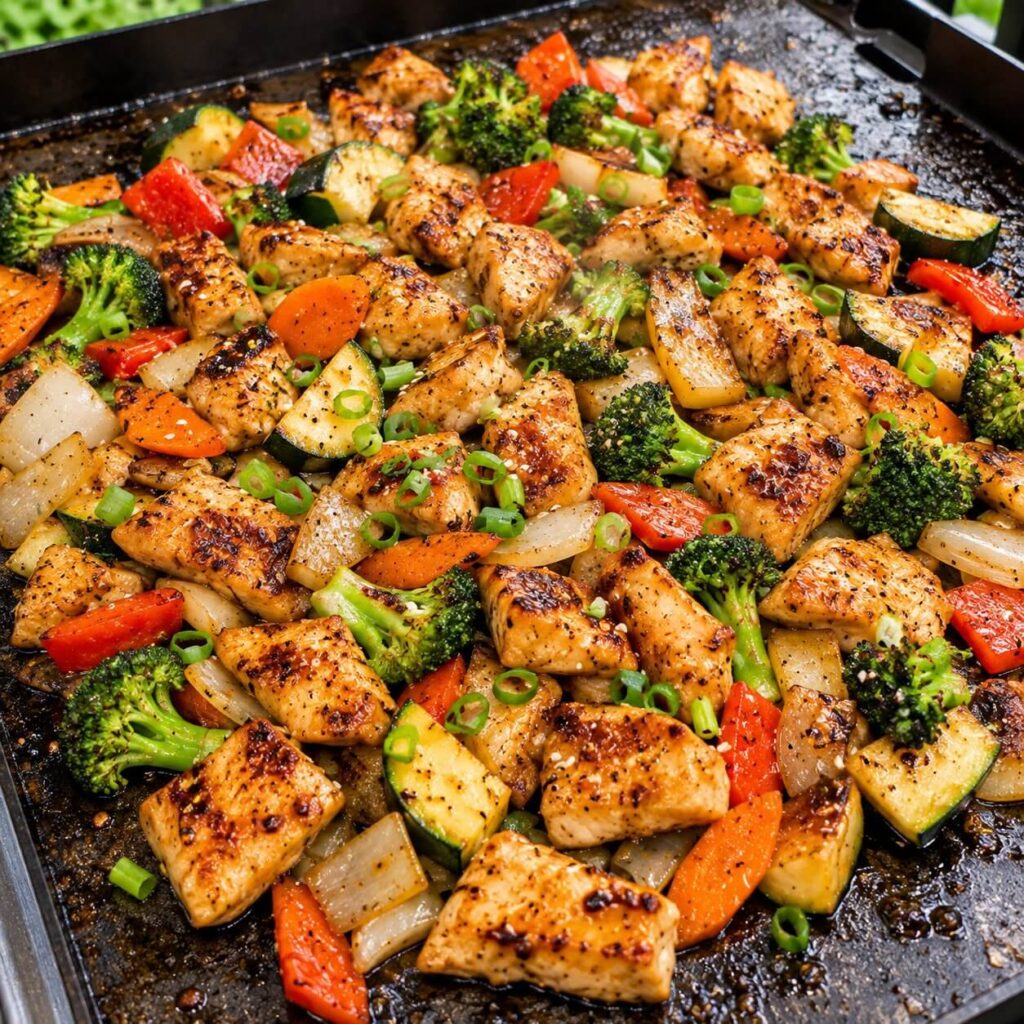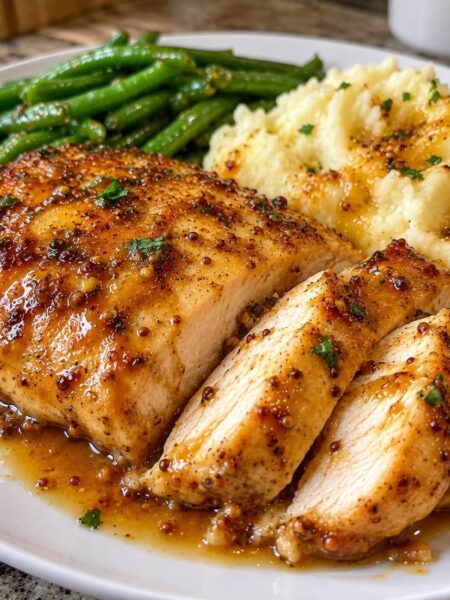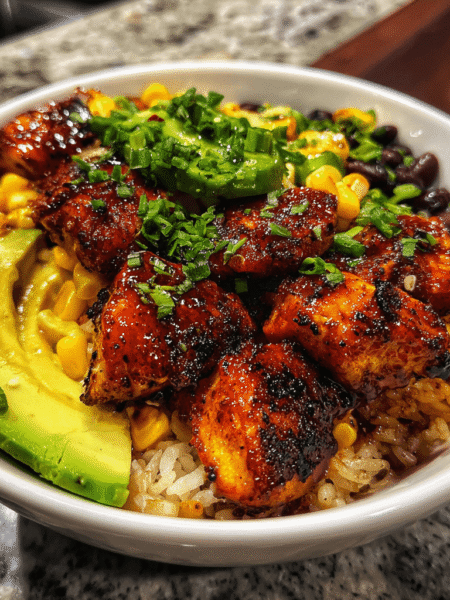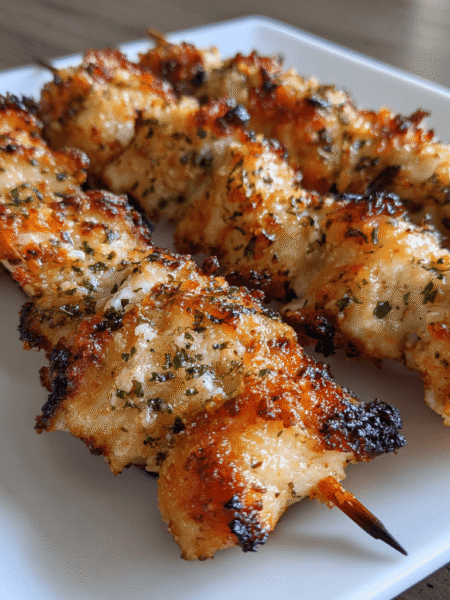

Blackstone Hibachi Chicken Breast and Veggies brings browned bite-size chicken together with zucchini, mushrooms, carrots, and onion, all finished with buttery soy, garlic, and ginger. The flat top gives each ingredient enough room to cook properly, so the chicken can develop golden edges while the vegetables stay crisp-tender.
Instead of covering everything in a thick teriyaki glaze, this version uses a lightly sweetened soy-garlic butter. The key is timing: prep everything first, stagger the vegetables, sear the chicken on the hotter side, and save the sauce for the final minutes.
Why You’ll Love This Blackstone Hibachi Chicken
A large flat-top griddle is ideal for Blackstone Hibachi Chicken Breast and Veggies because the chicken and vegetables don’t have to compete for the same cooking space.
- Fast cooking: Small chicken pieces and pre-cut vegetables cook quickly.
- Plenty of texture: Higher heat browns the chicken while the vegetables remain crisp-tender.
- Flexible sides: Serve with white rice, fried rice, noodles, or simply more vegetables.
- Easy to customize: Zucchini, mushrooms, carrots, and onions are easy to swap.
- Simple sauce: Soy sauce, butter, garlic, ginger, and honey add plenty of flavor without marinating.
Keeping separate heat zones also means you can pull each component as soon as it’s ready instead of overcooking one while waiting for another.
Ingredients for Hibachi Chicken Breast and Vegetables
For the chicken
- 1½ pounds boneless skinless chicken breasts: Cut into roughly 1-inch pieces.
- ½ teaspoon kosher salt: Keep it moderate because the soy sauce adds salt later.
- ¼ teaspoon black pepper: Adds mild heat.
- 1 tablespoon avocado oil: Works well for the hotter chicken zone.
For the vegetables
- 2 medium zucchini: Cut into thick half-moons.
- 1 medium yellow onion: Cut into thick strips.
- 1 cup sliced mushrooms: White or cremini both work.
- 1 large carrot: Slice thinly on the diagonal.
- 1 teaspoon sesame oil: Adds a toasted note.
For the soy-garlic butter
- 3 tablespoons low-sodium soy sauce
- 2 tablespoons unsalted butter
- 1 tablespoon honey
- 3 garlic cloves, finely minced
- 1 teaspoon freshly grated ginger
- 1 teaspoon sesame oil
Optional for serving
- Cooked white rice
- Fried rice
- Yum yum sauce
- Sliced green onions
- Sesame seeds
Keep the sides and toppings separate so Blackstone Hibachi Chicken Breast and Veggies can work as a simple protein-and-vegetable dinner or a complete hibachi-style plate.
Prep Everything Before the Blackstone Gets Hot
Cut the chicken into pieces close to 1 inch so they cook at roughly the same rate.
Prepare the vegetables according to how quickly they cook. Slice the carrot thinner than the zucchini, keep the onion fairly substantial, and leave the mushrooms in regular slices.
Combine the soy sauce, butter, honey, garlic, ginger, and sesame oil in a small bowl. Bring everything to the griddle before cooking begins because once the food hits the hot surface, the recipe moves quickly.
How to Make Blackstone Hibachi Chicken Breast and Veggies
1. Preheat two areas of the griddle
Heat one Blackstone zone over medium heat and another over medium-high heat.
Let the griddle preheat for several minutes. The medium zone is for the vegetables, while the hotter side gives the chicken a stronger initial sear.
2. Start with the slower vegetables
Add the sesame oil to the medium zone.
Cook the carrots first for about 2 minutes. Add the onion and mushrooms and cook another 2 minutes, turning occasionally.
Add the zucchini last. Spread the vegetables out rather than piling them together so moisture can evaporate and the edges can brown.
3. Sear the chicken breast
Pat the chicken dry and season with salt and black pepper.
Spread the avocado oil over the medium-high zone and arrange the chicken in a single layer with some space between the pieces.
Leave it undisturbed for 2 to 3 minutes. Once the bottoms have browned, turn the pieces and cook another 3 to 4 minutes, stirring occasionally.
4. Add the soy-garlic butter near the end
When the chicken is nearly cooked through, stir the prepared sauce and spoon most of it over the chicken. Add a smaller amount to the vegetables.
Toss the chicken through the bubbling sauce for 1 to 2 minutes, just until the butter melts and everything is lightly coated.
Adding the sauce late matters. Honey can scorch and garlic can become bitter when they’re exposed to a hot griddle for too long.
5. Check the chicken and vegetables separately
Check one of the largest chicken pieces with an instant-read thermometer. Remove the chicken once it reaches 165°F.
The vegetables should have browned edges but still hold their shape. If they finish first, move them to a cooler Blackstone zone.
Combine everything loosely before serving or keep the chicken and vegetables side by side.
The Best Order for Cooking Hibachi on a Blackstone
Timing matters more than complicated seasoning when making Blackstone Hibachi Chicken Breast and Veggies.
- Preheat the Blackstone.
- Start the thinly sliced carrots.
- Add onions and mushrooms.
- Add zucchini.
- Sear the chicken on the hotter zone.
- Add soy-garlic butter when the chicken is nearly cooked.
- Check the chicken for 165°F.
- Remove each component as soon as it’s ready.
This keeps tender zucchini from sitting over active heat while thicker pieces of chicken finish cooking.
For another quick chicken-and-vegetable dinner when you’re cooking indoors, try this 20 Minute Chicken Lo Mein with Veggies.
How to Get Browned Chicken Instead of Steamed Chicken
The Blackstone gives you plenty of cooking surface, so take advantage of it.
Dry the chicken
Pat the chicken dry before seasoning. Surface moisture has to evaporate before the meat can brown properly.
Don’t crowd the pieces
Spread the chicken into a single layer. A pile traps moisture and encourages steaming instead of searing.
Stop stirring constantly
Give the first side a couple of uninterrupted minutes against the hot surface. Turning constantly works against browning.
Sauce late
Brown the chicken first and add the liquid afterward. This gives Blackstone Hibachi Chicken Breast and Veggies better color while reducing the chance of scorching the honey and fresh garlic.
Keep Your Hibachi Vegetables Crisp-Tender
Carrots and zucchini shouldn’t hit the Blackstone at the same time because they cook at different speeds.
- Cut carrots thinly.
- Keep zucchini pieces thicker.
- Give mushrooms room to release moisture.
- Keep onion strips substantial.
- Move finished vegetables to a cooler zone.
- Add soy-garlic butter near the end.
If you’re adding broccoli or asparagus, give those firmer vegetables a 3 to 5 minute head start before adding zucchini.
What to Serve With Blackstone Hibachi Chicken
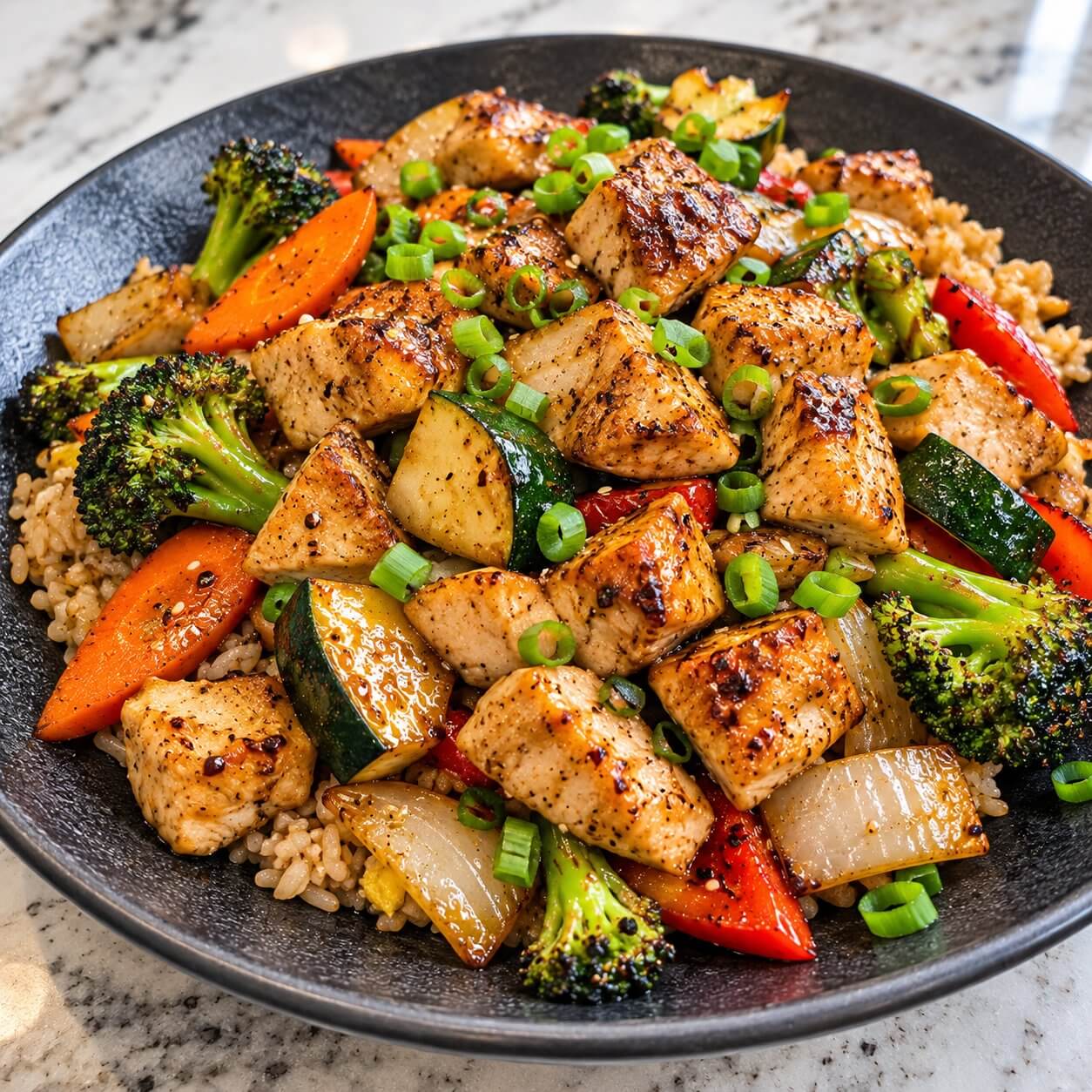
Fried rice
Fried rice turns Blackstone Hibachi Chicken Breast and Veggies into a fuller steakhouse-style meal. If you’re making it on the same griddle, cook the rice first and hold it on a cooler zone.
White rice
Steamed jasmine or long-grain rice keeps things simple and pairs naturally with the soy-garlic butter.
For an indoor chicken-and-rice option, this One Pan Chicken and Rice Bake uses an oven method with vegetables and savory chicken juices.
Yum yum sauce
Serve it alongside the chicken for dipping rather than coating everything before serving.
Noodles
Hibachi noodles or simple stir-fried noodles can replace rice.
No starch
Double the vegetables or serve with cauliflower rice when you want the meal centered on chicken and vegetables.
Easy Ways to Change the Veggies
The Blackstone makes vegetable swaps simple as long as you adjust when they hit the griddle.
Broccoli: Use small florets and start them several minutes before zucchini.
Bell peppers: Cut into thick strips and add with the onion.
Snap peas: Add near the end to preserve their crunch.
Asparagus: Cut into shorter pieces and start thicker stalks early.
Cabbage: Slice into strips and let the edges brown before turning.
Extra mushrooms: Their savory flavor pairs especially well with butter and soy sauce.
For the shortest prep, Blackstone Hibachi Chicken Breast and Veggies can also be made with just zucchini and onion.
Chicken Breast vs. Chicken Thighs
Chicken breast cooks quickly when cut into small pieces, but its leanness means it can dry out if left on the griddle too long.
Boneless skinless thighs are more forgiving. Cut them into similarly sized pieces and follow the same general cooking method.
Whichever cut you choose, use internal temperature rather than exterior color as your final doneness check. Chicken should reach 165°F.
Pro Tips for Better Blackstone Hibachi
- Finish the prep before cooking. Griddle cooking moves too quickly to stop and chop.
- Use separate heat zones. Chicken benefits from stronger heat than zucchini.
- Keep chicken pieces similar in size. They’ll finish more evenly.
- Give the first side time to sear. Constant stirring prevents good browning.
- Add the sweetened sauce late. Honey can scorch quickly.
- Watch the garlic. Keep everything moving once the sauce reaches the griddle.
- Taste before adding salt. Soy sauce already provides substantial seasoning.
- Use the cooler zone. Move vegetables there when they finish before the chicken.
- Clean sticky residue promptly. Sweetened sauce becomes harder to remove if it continues cooking onto the surface.
Common Mistakes to Avoid
Crowding the chicken
Packing the chicken together traps moisture. Spread it across the hot surface and work in batches if you’re doubling the recipe.
Starting every vegetable together
Carrots need more time than zucchini. Stagger the vegetables so each one reaches the right texture.
Adding the sauce immediately
Early sauce makes browning harder and exposes the honey and garlic to high heat for too long.
Using too much salt
Season conservatively before the soy-garlic butter goes onto the griddle.
Walking away after adding the sauce
Once the honey and soy hit the hot surface, keep the chicken moving so the sauce coats rather than burns.
Cooking breast meat by the clock alone
Chicken size and griddle heat vary. Check the largest pieces and remove them at 165°F.
Storage and Reheating
Refrigerate cooled Blackstone Hibachi Chicken Breast and Veggies in an airtight container for up to 4 days.
For meal prep, keep rice and creamy dipping sauces separate when possible. This helps the vegetables retain better texture.
Reheat the chicken and vegetables briefly on a lightly oiled skillet or griddle over medium-low heat. You can also microwave individual portions in short intervals, stopping as soon as they’re hot so the chicken doesn’t dry out.
Blackstone Hibachi Chicken Breast and Veggies FAQs
What temperature should a Blackstone be for hibachi chicken?
Use a medium-high zone for the chicken and a medium zone for the vegetables. Surface temperature varies with the griddle model and outdoor conditions, so separate heat zones are more useful here than relying on one exact temperature.
How long does cubed chicken breast take on a Blackstone?
One-inch pieces need about 2 to 3 minutes for the initial sear, followed by additional cooking and turning until they reach 165°F. The chicken portion generally takes around 7 to 9 minutes, although actual timing varies.
Why does my hibachi chicken stick?
Make sure the Blackstone is properly preheated and lightly oiled. Give the chicken enough uninterrupted cooking time to form a seared surface before trying to move it.
Can I make hibachi chicken without teriyaki sauce?
Yes. This recipe uses soy-garlic butter with a small amount of honey instead of bottled teriyaki, creating a lighter savory-sweet coating rather than a thick glaze.
Can I use coconut aminos instead of soy sauce?
Yes. Coconut aminos can replace soy sauce, although the sweetness and overall flavor will change. Tamari is another option when you need a gluten-free soy-based alternative.
Can I cook fried rice at the same time?
Yes, but prepare the fried rice first. Move it to a cooler Blackstone zone before starting the chicken and vegetables.
What vegetables are best for Blackstone hibachi?
Zucchini, onion, mushrooms, and carrots work particularly well. Broccoli, bell peppers, snap peas, asparagus, and cabbage are also good options when their cooking times are staggered.
How do I prevent hibachi sauce from burning?
Wait until the chicken is nearly cooked before adding the sauce. Keep everything moving once the honey and soy mixture hits the hot griddle.
Can I prepare the vegetables ahead?
Yes. Cut the vegetables and refrigerate them in separate airtight containers. The chicken can also be portioned ahead, but raw chicken should remain separate from vegetables and sauce.
Bring the Whole Griddle Together at the Finish
Blackstone Hibachi Chicken Breast and Veggies works best when each ingredient gets the cooking time it actually needs. Start the carrots early, give the zucchini less time, and let the chicken sit against the hotter griddle long enough to develop browned edges.
Add the soy-garlic butter only when the chicken is nearly finished, then pull the meat at 165°F and move the vegetables off the heat while they’re still crisp-tender. That short final toss gives everything the hibachi-style flavor without sacrificing the texture you worked to build.
Print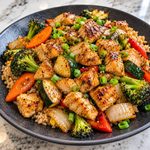
- Total Time: 25 min
- Yield: 4 servings 1x
Description
Blackstone Hibachi Chicken Breast and Veggies combines browned bite-size chicken breast with zucchini, mushrooms, carrots, and onion, then finishes everything with a savory soy-garlic butter made with fresh ginger and a touch of honey. Separate griddle zones help keep the chicken juicy and the vegetables crisp-tender.
Ingredients
1½ pounds boneless, skinless chicken breasts, cut into roughly 1-inch pieces
½ teaspoon kosher salt
¼ teaspoon black pepper
1 tablespoon avocado oil
2 medium zucchini, cut into thick half-moons
1 medium yellow onion, cut into thick strips
1 cup sliced white or cremini mushrooms
1 large carrot, thinly sliced on the diagonal
1 teaspoon sesame oil, for cooking the vegetables
3 tablespoons low-sodium soy sauce
2 tablespoons unsalted butter, softened
1 tablespoon honey
3 garlic cloves, finely minced
1 teaspoon freshly grated ginger
1 teaspoon sesame oil, for the soy-garlic butter
Cooked white rice or fried rice, optional for serving
Yum yum sauce, optional for serving
Sliced green onions, optional for serving
Sesame seeds, optional for serving
Instructions
1. Cut the chicken breasts into roughly 1-inch pieces. Keep the pieces similar in size so they finish cooking at approximately the same time. Pat the chicken dry and season with the kosher salt and black pepper.
2. Prepare all vegetables before heating the griddle. Cut the zucchini into thick half-moons, the onion into thick strips, the mushrooms into slices, and the carrot into thin diagonal slices.
3. In a small bowl, combine the low-sodium soy sauce, softened butter, honey, minced garlic, grated ginger, and 1 teaspoon sesame oil. Keep the sauce beside the griddle because it will be added near the end of cooking.
4. Preheat the Blackstone with one section over medium heat and another section over medium-high heat. The medium section will cook the vegetables while the hotter section will sear the chicken.
5. Add 1 teaspoon sesame oil to the medium-heat zone. Add the thinly sliced carrots and cook for approximately 2 minutes, turning occasionally.
6. Add the onion and mushrooms to the carrots and continue cooking for approximately 2 minutes.
7. Add the zucchini to the vegetable zone. Spread the vegetables out so released moisture can evaporate rather than collecting underneath them. Continue turning occasionally while you cook the chicken.
8. Spread 1 tablespoon avocado oil across the medium-high zone. Arrange the seasoned chicken pieces in a single layer, leaving space between the pieces.
9. Cook the chicken without moving it for approximately 2 to 3 minutes so the first side can develop browned edges.
10. Turn the chicken and continue cooking for approximately 3 to 4 minutes, stirring occasionally, until the largest pieces are nearly cooked through.
11. Stir the prepared soy-garlic butter and spoon most of it over the chicken. Add a small spoonful to the vegetables.
12. Immediately toss the chicken through the melting butter and sauce. Continue cooking and moving the chicken for approximately 1 to 2 minutes so the sauce lightly coats the pieces without sitting long enough to scorch.
13. Turn the vegetables through their small amount of sauce and check their texture. They should have browned edges while remaining crisp-tender. Move them to a cooler zone if they finish before the chicken.
14. Check one of the largest chicken pieces with an instant-read thermometer. Remove the chicken from the griddle as soon as the center reaches 165°F.
15. Taste the chicken and vegetables before adding additional salt because the soy sauce provides significant seasoning.
16. Serve immediately, either with the chicken and vegetables side by side or loosely combined. Add white rice, fried rice, yum yum sauce, green onions, or sesame seeds if desired.
Notes
Preparation: Have the chicken, vegetables, and soy-garlic butter completely prepared before cooking. Hibachi-style griddle cooking moves quickly once the ingredients hit the Blackstone.
Chicken size: Keep the chicken pieces close to 1 inch. Very small pieces can dry out before oversized pieces finish.
Chicken browning: Leave the first side undisturbed for approximately 2 to 3 minutes. Constant stirring reduces direct griddle contact and browning.
Heat zones: Use medium-high heat for the chicken and medium heat for the vegetables. A cooler area also gives you somewhere to hold vegetables that finish early.
Vegetable timing: Carrots cook more slowly, so start them first. Onion and mushrooms follow, with zucchini added last.
Additional vegetables: Broccoli and asparagus should get approximately a 3 to 5 minute head start. Bell peppers can cook with the onion, while snap peas should go on later.
Sauce timing: Add the soy-garlic butter only when the chicken is nearly cooked. Honey can scorch and garlic can become bitter when left on a hot griddle too long.
Doneness: Chicken breast must reach 165°F internally. Check one of the largest pieces rather than relying only on cooking time or exterior color.
Chicken thighs: Boneless, skinless chicken thighs can replace chicken breast. Cut them into similarly sized pieces and cook completely.
Soy sauce alternatives: Tamari can provide a gluten-free alternative, while coconut aminos can also work but will change the sweetness and overall flavor.
Rice and sauces: Optional white rice, fried rice, yum yum sauce, green onions, and sesame seeds are not included in the nutrition calculation.
Storage: Refrigerate cooked chicken and vegetables in an airtight container for up to 4 days.
Reheating: Warm leftovers briefly on a lightly oiled griddle or skillet over medium-low heat, or microwave individual portions in short intervals until hot.
Griddle cleanup: Sweetened soy sauce can leave sticky residue. Scrape excess residue toward the grease trap while the griddle remains manageable, then clean the cooking surface after removing the food.
Nutrition: Nutrition values are estimated per serving from the exact main-recipe ingredients divided into 4 servings. Optional rice, fried rice, yum yum sauce, green onions, and sesame seeds are excluded. Values can vary with chicken size, soy sauce brand, and vegetable size.
- Prep Time: 10 min
- Cook Time: 15 min
- Category: Dinner
- Method: Blackstone Griddle
- Cuisine: Japanese Steakhouse-Inspired
Nutrition
- Serving Size: About 1½ cups chicken and vegetables
- Calories: 380
- Sugar: 8 g
- Sodium: 980 mg
- Fat: 16 g
- Saturated Fat: 6 g
- Unsaturated Fat: 9 g
- Trans Fat: 0.2 g
- Carbohydrates: 14 g
- Fiber: 3 g
- Protein: 42 g
- Cholesterol: 125 mg
Keywords: Blackstone Hibachi Chicken Breast and Veggies, Blackstone hibachi chicken, hibachi chicken and vegetables, Blackstone chicken breast, griddle chicken and veggies